DIGITAL MAGAZINE | CYBER SECURIUTY AWARENESS
Sentinel
At apex Computing, our mission is simple - to make IT simple - to empower North West businesses with the tools, knowledge, and confidence to thrive securely in a digital-first world.
Cyber threats are constantly evolving, but so too are the opportunities to strengthen your defences. For us, cyber security isn't just about technology - it's about people. It's about building awareness, good habits, and a culture of security across every team.
This digital magazine brings together our key insights: from phishing and password best practices, to leadership strategies that shape stronger security cultures. Each article is designed to help you take practical, meaningful steps towards greater cyber resilience.
Contents
.png?width=24&height=24&name=report%20(1).png)


.png?width=24&height=24&name=teaching%20(1).png)
Top 5 Cyber Threats SMEs Should Watch for in 2026
Cyber threats are evolving faster than ever - and for small and medium-sized enterprises (SMEs), the risks are multiplying. As 2026 approaches, attackers are combining automation, artificial intelligence (AI), and social manipulation to outsmart traditional defences. Here at the top 5 threats every business should keep on their radar.
For SMEs, cyber security in 2026 isn't just about defending against attacks - it's about building resilience. With threats becoming more sophisticated, prevention, detection and response must all work together. The businesses that thrive will be the ones that treat cyber security not as a checkbox, but as a culture.
.png?width=24&height=24&name=clickbait%20(1).png)
Threat 1: Phishing and Business Email Compromise (BEC)
Phishing remains the number one way cyber criminals infiltrate businesses - and BEC attacks are becoming increasingly personal.
In 2026, expect to see highly convincing emails that appear to come from trusted contacts, complete with correct branding, tone, and even AI-generated writing styles.
Attackers are using stolen data from previous breaches to craft believable messages that trick staff into transferring money or credentials.
Tip: Regular staff training, multi-factor authentication (MFA), and real-time threat monitoring are key to defending against BEC scams.
.png?width=24&height=24&name=maintenance%20(2).png)
Threat 2: Ransomware-as-a-Service (RaaS)
Ransomware is no longer the domain of elite hackers. Ransomware-as-a-Service gives anyone with bad intentions access to ready-made malware kits and payment portals. The result? A surge in low-skill but high-volume attacks targeting SMEs - the most profitable "sweet spot" for criminals who know smaller firms often lack enterprise-grade protection.
Tip: Keep offline backups, patch systems regularly, and use endpoint detection and response (EDR) solutions to detect suspicious activity early.
.png?width=24&height=24&name=cloud%20(5).png)
Threat 3: Cloud Misconfiguration and Data Theft
As more businesses move data and applications to the cloud, misconfigurations are fast becoming one of the biggest sources of data leaks.
From poorly configured access controls to unencrypted storage buckets, even small error can expose sensitive data publicly or to cyber criminals scanning for vulnerabilities.
Tip: Regularly audit your cloud security settings and use automated configuration tools to ensure compliance and visibility.
.png?width=24&height=24&name=teaching%20(2).png)
Threat 4: Deepfake Voice Fraud and AI Engineering
AI has created a new class of threats. Deepfake voice scams are on the rise, with attackers cloning voices of executives or suppliers to authorise payments or extract confidential information.
Meanwhile, "AI engineering" - the malicious manipulation of AI systems or data sets - is emerging as a powerful attack vector. Compromised AI models can produce misleading results, corrupt data, or open back doors for attackers.
Tip: Establish strict verification processes for voice or video instructions and monitor AI systems for abnormal activity or data drift.
.png?width=24&height=24&name=right-arrow%20(2).png)
Threat 5: Supply Chain Compromise
In 2026, attackers are increasingly bypassing direct defences by targeting suppliers, software vendors, and managed service providers.
A single compromised partner can create a cascade of risk across the entire business ecosystem - something SMEs often overlook. Cyber criminals know this and are exploiting trusted relationships to deliver malware or steal credentials through legitimate channels.
Tip: Evaluate the security posture of your suppliers, insist on transparency in cyber security practices, and segment your network to reduce the blast radius of a breach.
Meet Ross Ansell
We spoke to one of our T3 Engineers, Ross, who has been with Apex Computing since February 2024!
Ross started his IT career in one of the UK's largest construction companies, joining the IT support side of the industry a few years later.

.png?width=24&height=24&name=threat-detection%20(1).png)
Vision, Not Vigilance
Leaders don't need to be cyber experts - they need to make cyber a business priority. Ask: "How secure are we compared to where we want to be?".
.png?width=24&height=24&name=teaching%20(3).png)
Talk About It Often
Include a "Cyber Moment" in every board meeting. Two minutes on one security update. Keep it visible.
.png?width=24&height=24&name=secure%20(2).png)
Recognise Security Champions
When someone reports a phishing email or flags a risk, celebrate it like a sales win. Reward curiosity.
.png?width=24&height=24&name=Untitled%20design%20(58).png)
"Security culture isn't a policy - it's a posture. And it starts with the people who set the tone"
.png?width=24&height=24&name=wrench%20(2).png)
Build a Culture of Curiosity
Empower teams to question unusual emails, challenge requests, and learn. Make security approachable, not fearful.

Partner Power
Collaborate with partners (like Apex) for regular audits, tabletop exercises, and roadmap sessions. Cyber maturity is a journey, not a checkbox.
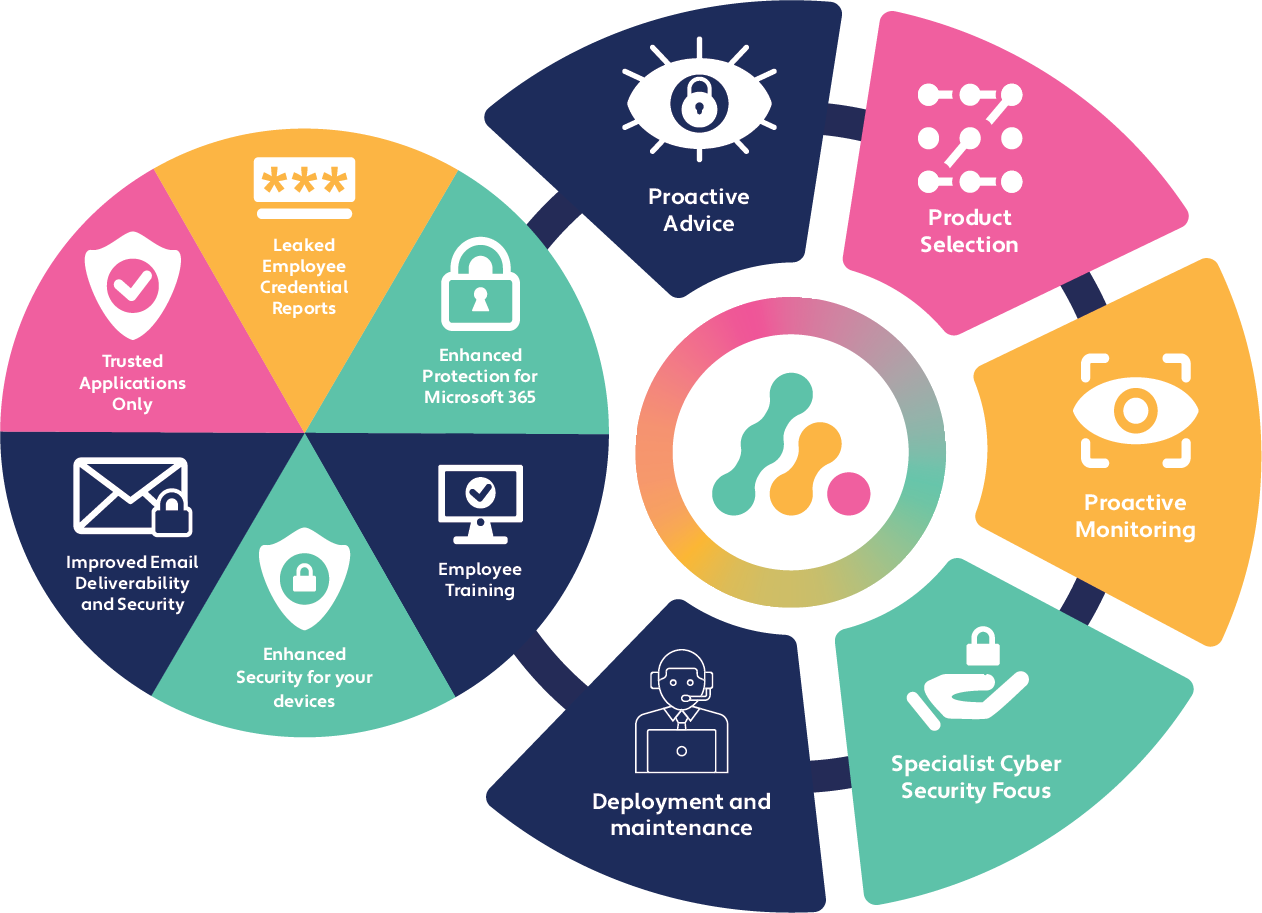
The Apex Cyber Security Sphere is a comprehensive solution, bringing together the best tools to keep your business secure and future-ready
- Firewalls and Network Defence
- Endpoint and User Protection
- 24/7 SOC Monitoring
- Backup and Recovery
- Awareness and Compliance